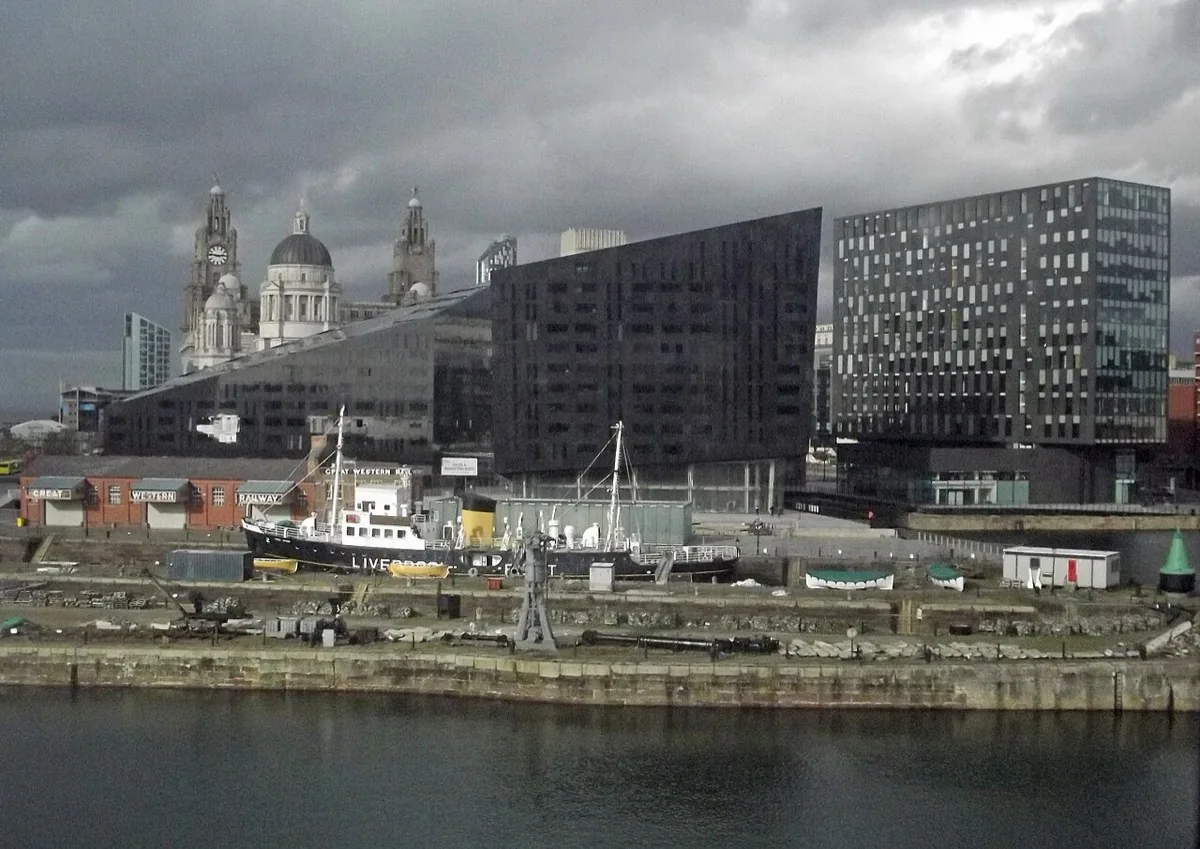
Among the highest rental yields of any major UK city, a £5.5bn waterfront transformation, and a new Freeport.
Liverpool pairs some of the highest rental yields of any major UK city with an average price well below the UK figure — and the North West is forecast to lead the country for capital growth. Behind it sits £5.5bn of waterfront regeneration and a new Freeport.
Liverpool waterfrontLiverpool’s docklands are being transformed on a scale rarely seen — anchored by a new Premier League stadium and a life-sciences cluster.
A 30-year, 60-hectare waterfront transformation, now anchored by Everton’s new stadium.
ActiveA life-sciences and health cluster (CELT, HEMISPHERE labs) targeting ~8,000 jobs.
ActiveA government-backed investment zone supercharging health and life sciences.
FundedA deep-water terminal handling the world’s largest container ships.
OperationalA creative-industries district targeting 2,500+ jobs.
Long-termThe digital and creative quarter, named among the UK’s coolest places to live.
OngoingSavills forecasts the North West to lead every UK region for house-price growth to 2029/30 — and Liverpool’s affordability gives it the most runway.
A large student population (c.60,000–70,000 across three universities) sits alongside a growing young-professional cohort tied to digital, healthcare and creative-sector job growth in the centre.
Every area here sits inside the L1–L3 city-centre postcodes, from the waterfront to the financial district.
Liverpool’s creative and tech quarter — former industrial warehouses converted to studios, offices and apartments, with a £100m+ new railway station under way.
A bar, restaurant and nightlife district immediately south of Liverpool ONE, popular with young-professional and short-let tenants and walkable to the universities.
The city’s principal retail and leisure anchor — Liverpool ONE, Chinatown and Concert Square — where footfall-driven demand underpins city-centre living and short-let stock.
Liverpool’s financial and professional-services quarter around Castle Street and Dale Street — Grade II listed bank and office buildings converting to apartments for corporate tenants.
Premium waterfront apartment schemes on the UNESCO-adjacent Pier Head frontage, part of the wider Liverpool Waters masterplan — the higher-value, capital-growth end of city-centre stock.
Liverpool’s “Harley Street” — Grade II listed Georgian townhouses near the cathedrals and universities, drawing professional and postgraduate tenants.
A large student population and world-class tourism underpin genuinely deep rental demand.
The University of Liverpool and Liverpool John Moores together host around 57,000 students, anchoring a renewing tenant base — reinforced by a fast-growing airport and world-famous tourism.
The electrified Merseyrail network, fast links to Manchester and London, and a Freeport port handling the world’s largest ships.
A £33bn city-region economy with a growing life-sciences cluster, a global port and a world-class visitor economy.
Major employers with a significant Liverpool presence include:
“Yields among the highest of any major UK city, a £5.5bn waterfront reborn around a new stadium, a Freeport, and the North West forecast to lead the UK for growth. Liverpool is where affordability meets momentum.”
Book a call and we’ll bring you current, fully-vetted Liverpool opportunities — with the real, cost-in numbers behind every one.
*Figures are drawn from public sources including ONS, HESA, Savills and JLL. Forecasts are third-party projections, not guarantees; property values and rents can fall as well as rise. Yields and prices vary by property, area and market conditions. This is general information, not financial advice.
For yield, it's one of the strongest in the UK — gross yields of 5–8%+ against an average entry price of only around £185k, with forecast growth of 25–31% behind the £5.5bn Liverpool Waters waterfront regeneration. It's the highest-yield, lowest-entry-cost city on our list.
5–8%+ gross is realistic across the city, with the strongest numbers typically in HMO and student-focused strategies given the ~57,000-student population. Run your own numbers on our yield calculator.
Liverpool Waters (the £5.5bn waterfront scheme), the Knowledge Quarter (life sciences and university-linked development) and the Baltic Triangle (the creative/tech district with the fastest-rising values) are where the momentum is concentrated.
It reflects Liverpool's longer economic recovery curve rather than lower demand — the city is now in the middle of one of the largest waterfront regenerations in Europe, which is precisely why entry prices remain low relative to the growth forecast. That combination is the investment case, not a red flag.
No. Sourcing, due diligence, conveyancing and management can all be handled remotely — see our guide for overseas investors.
Liverpool’s low average property prices (£185,000, ONS) against strong, broad-based rental demand — from three universities and a growing digital/healthcare/creative jobs base — combine to produce a city-wide average gross yield of 7.7% (Zoopla), among the highest of any major UK city. It’s the clearest yield-first market on our list.
Non-UK residents pay a 2% Stamp Duty Land Tax surcharge on top of all other applicable rates, which stacks with the standard 5-percentage-point surcharge on additional/buy-to-let properties — so a non-resident buying a second property here pays 7 percentage points above the standard residential rate (GOV.UK; Deloitte TaxScape, current 2025/26 rates). We’ll model the exact figure for any specific property before you commit, and our stamp duty calculator gives you a fast estimate.
One email a month: a shortlist of current, fully-underwritten UK opportunities with real net figures — plus a short read on where the market is moving. No spam, no hard sell, unsubscribe in one click.